The first battles
January 26th 1995
War is not an occasional phenomenon; it is a terrible constant in the historical equation of people. They try to keep it at a minimum value, but history proves otherwise. Peace is achieved only by societies who remain alert, prepared and vigilant. This is known better than anyone by men in uniform. The soldier will always avoid war, but he will step on the battlefield before anyone else. The soldier longs to live and return home. Dying for one’s homeland is a consequence, not a desire, although death clothes it with glory.
On January 11, 1995, two Peruvian patrols surprised an Ecuadorian patrol illegally wandering in Peruvian territory. Peruvian officials demanded immediate withdrawal to the border line. Ecuadorian officers responded angrily, seemingly irrationally, by opening fire, a reaction that forced Peruvian patrols to respond to the surprise attack. The pitiful result was one Ecuadorian soldier killed and another wounded. The fuse of war was lit in an instant that, seen from the comfort of time, seems useless and inconsequential, but we will not be prophets of the past. These stories are a tribute to those who gave their lives in the defense of the territory, professional soldiers who do not deserve to be forgotten.
Faced with the possibility of escalating the war, the Peruvian commanders decided to prepare the ground as best as possible. It is the duty and doctrine of every soldier to try to anticipate the facts. Because logistics are the cornerstone of any military operation, the «Roosevelt» patrol, under the command of Infantry Lieutenant William Guzmán Espinoza, was sent to build a heliport further north of the infiltrated enemy positions, a tactic that would allow a pocket to be formed.
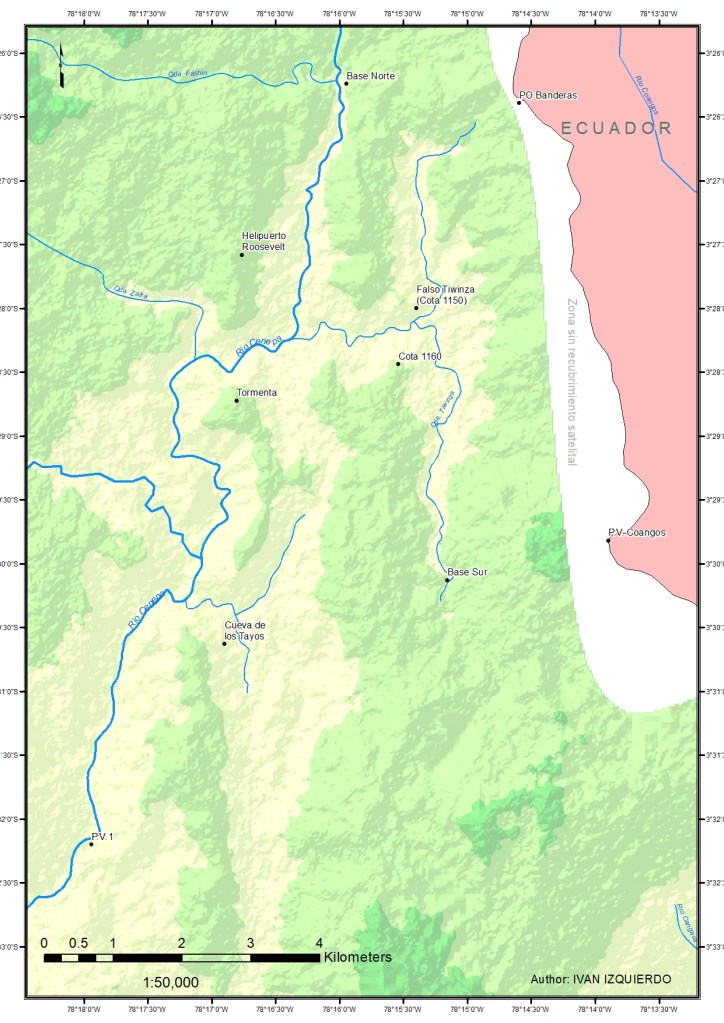
On January 26, Lieutenant Guzmán and his men were already in the middle of construction work on elevation 1325, located about 8 or 9 kilometers north of the PV-1, near the Zafra creek surrounding the positions «Cueva de los Tayos», «Base Sur» and the «Tiwinzas» created by the invader, about three kilometers to the east (see map).
Days earlier, an Ecuadorian Gazzele helicopter flew over the position of the Roosevelt patrol detecting the construction work and notifying its command. Later, the Ecuadorian propaganda machine would go ahead and report that «Peruvian helicopters would be flying over the area to bomb the Ecuadorian patrols,» when in fact they were flying in logistical support for the construction of the heliport.
On the 26th, Ecuadorian ground forces surrounded Guzmán’s position and began a surprise attack. A squadron of gunned Gazzele helicopters joined, which rocket fire on the Peruvians with little effectiveness. The «Roosevelt» patrol headed to the heights of the 1400 level, this gave them an advantage and they were able to keep the enemy advance at bay with only rifle fire. The aggressors attacked with powerful mortars and rifles. In the heat of the battle, Lieutenant Guzmán had to be treated for a bullet wound by non-commissioned officer Minchán, while Private Eduardo Lijisán Asacha (a native of the area) was covering. At that moment, one of the grenades hit near the position of the three men, ending their lives. Faced with this fatality, 1st Sergeant Second Soto Paz, assumed command of the patrol that was in a deadly position, reorganizing the defense device with great perspicacity, which would allow them to hold out for four more days until the ammunition reserve was exhausted. After burying the fallen under the cover of night and fog, Soto ordered the removal. Time would show that the Ecuadorian troops, including their aviation, were afraid of the jungle darkness, when their operations and effectiveness disappeared. After 18 days of tortuous road, wading through the enemy and surviving in the virgin jungle, Soto and the rest of the «Roosevelt» patrol manage to reach PV-1.
This first episode and feat demonstrated the metal of which Peruvian soldiers are made, brave in combat, with initiative, intelligence and audacity, forged in the constant combat against terrorist groups and admired by the international militia. Later, General Ariel of the Brazilian army, publicly, considered them «among the best soldiers in the world.»
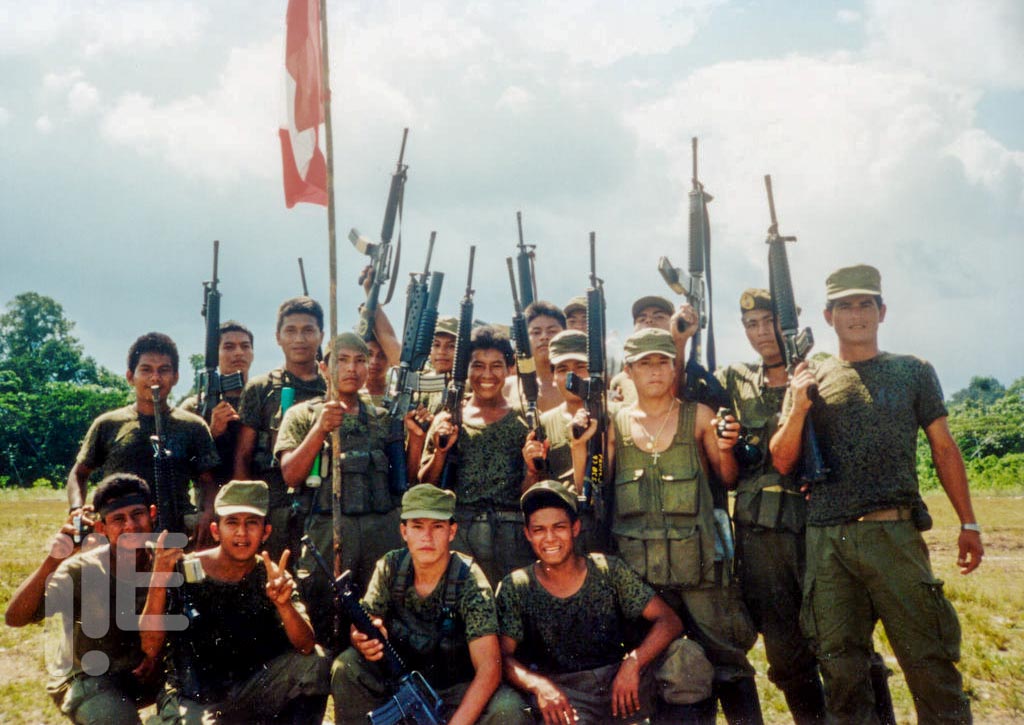
In this first act of war, denounced by Peru before the OAS and International Public Opinion, the following lost their lives:
- Infantry Lieutenant William Guzmán Espinoza. «Roosevelt.»
- Non-commissioned officer 2nd nurse Segundo Minchán Infantes.
- 2nd Sergeant Severo Álvarez Rojas.
- Corporal Eduardo Lijisan Asacha.
- Private Magdonio Sarmiento Vásquez.
Eternal glory to the brave men who gave their lives for Peru, the first Giants of Cenepa to fall to foreign aggression, in a conflict that would escalate rapidly.
 Home
Home 