Is there really an invisible hand that regulates the market?
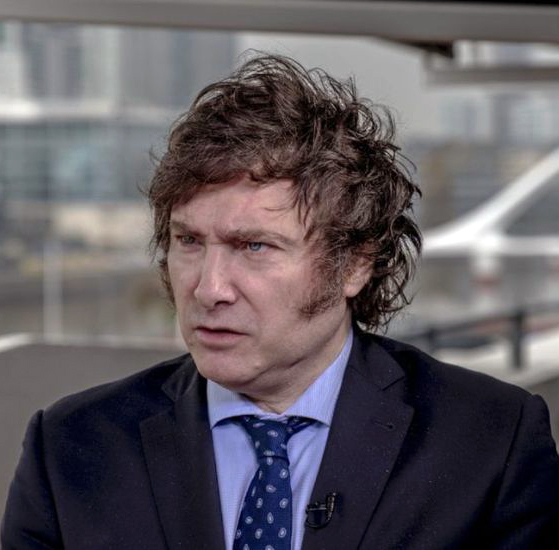
Javier Milei says that his tousled hair is combed by «the invisible hand of the market.» The mainstream Peruvian economists of the 1990s claimed that the «invisible hand of the market» would produce the «dripping», in short, that national growth would benefit everyone. Why do the liberal economists—especially the neoliberal ones—of the world repeat and sustain the principles of the model in «the invisible hand»? What is «the invisible hand»?
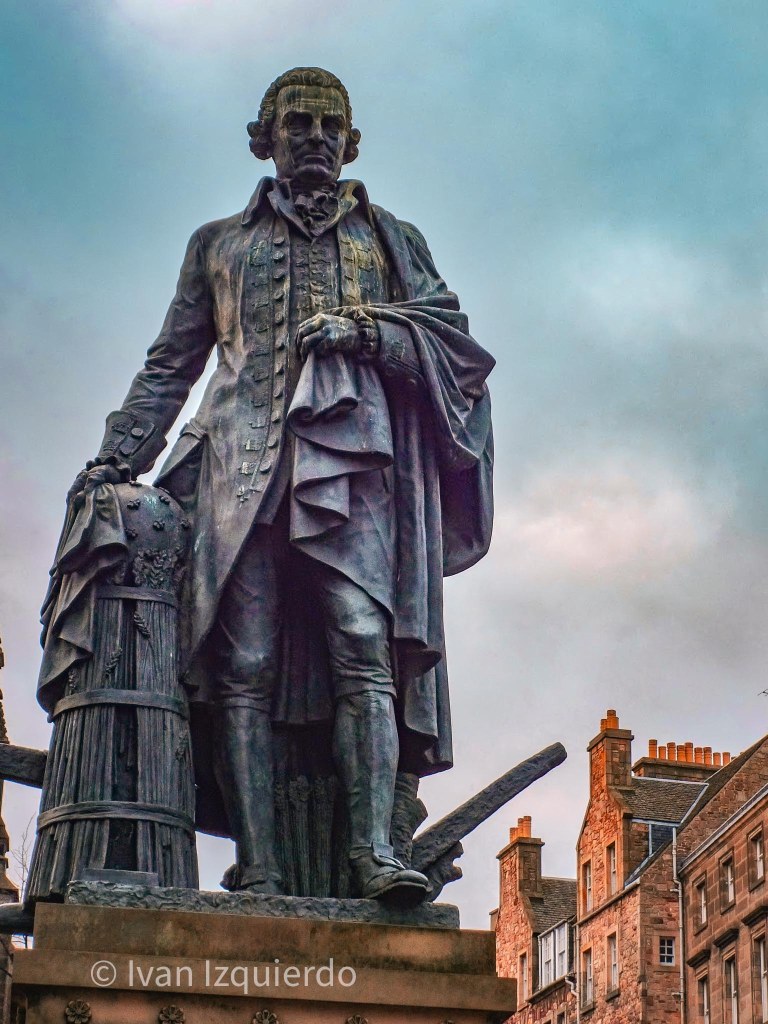
In 1776 the Scottish philosopher Adam Smith published the famous work The Wealth of Nations[1], for many, the first treatise on capitalism and in which he used the famous metaphor «the invisible hand»; for this reason, he is named as «the father of economics».
Adam Smith was neither an economist nor a promoter of capitalism, he was a humanist philosopher who keenly observed how the prevailing mercantilist system worked at the time (mercantilism is not the same as capitalism). Smith’s first book was even called «Theory of Moral Sentiments«, a humanist and critical text that was published in 1759 and laid the ethical, philosophical and economic foundations for his future works.
The metaphor of the «invisible hand» only appears in the book The Wealth of Nations, only once in the entire extensive work, specifically in chapter 2 of book IV entitled: » Of Restraints upon the Importation from foreign Countries of such Goods as can be produced at Home”; this chapter describes what we would call today, an economic «nationalism».
“By restraining, either by high duties or by absolute prohibitions, the importation of such goods from foreign countries as can be produced at home, the monopoly of the home market is more or less secured to the domestic industry employed in producing them[2]”.
Currently, the United States and the European Union are increasing tariffs on Chinese products to halt the Eastern power’s economic advance. These kinds of measures work against free trade, but they certainly protect local industry. It is the same as the Peruvian economic model of the seventies and eighties, with high tariff barriers.
«But a capital employed in the home trade, it has already been shown, necessarily puts into motion a greater quantity of domestic industry and gives revenue and employment to a greater number of the inhabitants of the country, than an equal capital employed in the foreign trade of consumption. «
Smith recognizes that investment in society itself brings benefits to the country’s industry. He does not propose an economic autarchy, simply, he is discovering the dynamics that occur in the market governed by the mercantilist model of the time.
The metaphor of the «invisible hand» appears several paragraphs later.
«He generally, indeed, neither intends to promote the public interest, nor knows how much he is promoting it. By preferring the support of domestic to that of foreign industry, he intends only his own security; and by directing that industry in such a manner as its produce may be of the greatest value, he intends only his own gain, and he is in this, as in many other cases, led by an invisible hand to promote an end which was no part of his intention”.
The capitalist invests money seeking his own benefit, moreover, he generally does so thinking only of his own benefit; however, Smith observes that, if the investment is made within his own society, it will produce an unexpected, unforeseen, casual effect. Smith employs the metaphor of «the invisible hand» to describe a non-deliberate effect; This explanation is far from the common meaning of «autonomous market regulation», because there is no perfect market.
On the contrary, when the neoliberal model was adopted during the 1980s, the United States dismantled its productive industry to move it to Asian countries, especially China. Extremely cheap labor countries that helped companies to reduce costs dramatically. As predicted by Adam Smith, what it produced is that the United States today depends on Chinese manufactures, a country to which they transferred their technical knowledge, benefiting the Asian giant. The «invisible hand» worked well, but for the economic rival. In Peru, the economists who promoted neoliberalism in the nineties repeated the phrase like a mantra, a kind of magic spell that would produce the long-awaited prosperity. The deregulation of the financial market (non-existent in the time of Adam Smith) was achieved to produce what we are witnessing today, a precarious economic model, vulnerable to international ups and downs, a pandemic and political turmoil.
If Adam Smith were alive, it is most likely that when studying the model adopted by today’s capitalism, he would criticize the decisions that the world has been making; in addition, he would look at Javier Milei’s hair and would certainly say: «keep it up, because no invisible hand will comb your hair».
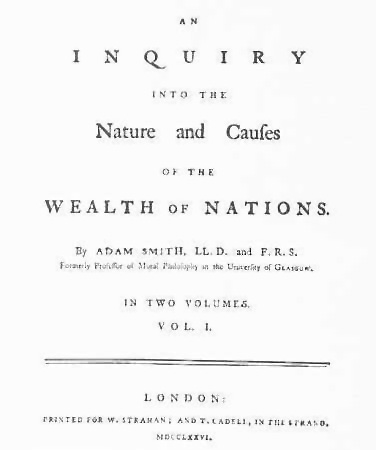
[1] Smith, Adam. An Inquiry into the Nature and Causes of the Wealth of Nations.
[2] Smith, Adam. The Wealth of Nations: Filibooks Classics (Illustrated) (English Edition) (p. 440). Filibooks. Kindle edition. (Note: translations are my own).
 Home
Home 